
Website development
Website Development
Professional website development gives your business a site that loads properly, is straightforward to manage, and is built to generate enquiries rather than simply exist online.
// routing, cms, performance
export function Page() {
const route = await load();
const seo = buildMetadata(route);
return <Site />;
}
Website development built around how your business works
We develop websites for business owners, marketing teams and operations leads who need more than a brochure that is hard to change. That includes new sites, CMS platforms, custom functionality, redevelopment of an outdated stack, and migrations where content, URLs and integrations have to move without losing what already works.
Our website development services cover planning, frontend and backend work, CMS setup, integrations, performance, technical SEO and the support that follows launch. Visual website design sits alongside that work when the look and the user journey need shaping. This page is about how the site is built and how it behaves.
01
What website development involves, and who it is for
Website development is the work of planning, building and launching a website that people can use and that your team can run. It includes the structure of the site, the templates and components, the CMS, the forms and tools that collect enquiries, and the connections to other software you already rely on.
Frontend web development is what visitors see and interact with: layout, navigation, forms, responsive behaviour and the way pages render on different devices. Backend web development is what sits underneath: content models, databases, authentication, APIs, integrations and the rules that keep the site secure and maintainable. CMS website development sits between the two. It is how editors publish pages, manage content and add new material without asking a developer for every change.
Custom website development, or bespoke website development, is the right path when a template cannot support the way you work. Booking, calculators, gated content, search, customer portals and unusual enquiry flows all need decisions in the architecture, not a plugin piled on afterwards. If the project becomes an internal system or a product you sell to many customers, that work belongs with custom software or SaaS development rather than stretching a conventional website past its purpose.
02
The problems that hold business websites back
A slow website costs attention before anyone reads a word. Heavy pages, uncached assets, poorly chosen plugins and an overcrowded frontend all make the site feel unreliable. On a phone the same issues show up as cramped layouts, awkward forms and navigation that is hard to use with a thumb. That is a lead generation problem, not only a technical one.
Outdated platforms create a different kind of drag. Editors cannot publish without breaking templates. New landing pages take too long. Security updates are postponed because nobody is sure what they will disturb. The site becomes expensive to maintain because every small change is treated as a risk. Limited functionality has the same effect: the business needs a booking flow, a filtered resource library or a better enquiry form, and the current stack cannot do it without workarounds.
Broken integrations waste time in the background. When a form does not reach the CRM, when bookings do not sync, or when third party tools fail quietly, staff copy data by hand and leads go missing. Technical SEO problems sit on top of all this. Weak architecture, duplicate URLs, missing redirects, slow Core Web Vitals and pages that search engines cannot crawl properly make it harder for the site to earn organic visibility. Eventually the platform cannot support growth: more services, more locations, more campaigns, more content, and a site that was never built for that load.
03
How professional website development supports the business
A well built website should make it easier for someone to understand what you do and to get in touch. Faster pages, clearer journeys and forms that actually arrive in the right system all support that. Responsive website development means those journeys work on the devices people already use, rather than treating mobile as an afterthought.
Professional web development also reduces administration. A sensible CMS, reusable components and a content model that matches how you publish let marketing teams work without a ticket for every heading change. Integrations cut the same waste on the operations side. The site can talk to CRM tools, booking platforms and other software so staff are not retyping enquiries.
None of this is a guarantee of traffic, rankings or a set number of leads. It is the difference between a site that fights the business and one that can carry it. SEO friendly website development puts architecture, performance, crawlability and redirects into the build so later SEO work has something solid to stand on. The same planning leaves room to grow: new sections, new services and new campaigns should not require a rebuild each time.
04
Website development services
We provide website development services for businesses that need a site built around their content, enquiries and operations. Typical work includes:
- Custom website development
- Business and CMS website development
- Frontend and backend web development
- Customer portals, booking systems and custom forms
- Search, calculators and API integrations
- CRM and third party integrations
- Website migration and redevelopment
- Performance optimisation and technical SEO
- Ongoing website support
If the brief is an online store, that is a specialist ecommerce build rather than a standard marketing site. If you also need a mobile app or AI inside a product, we treat those as related pieces of work rather than forcing them into the website by default.
05
Integrations, performance and technical foundations
Most business websites need to connect to something else. CRM platforms, email tools, booking systems, payment providers, analytics and internal databases all sit behind the pages visitors see. Frontend and backend development should treat those connections as part of the site, with error handling and a content model that still works when an external tool changes.
Performance is part of the same foundation. Image handling, caching, scripts, hosting and how templates are built affect Core Web Vitals and the way the site feels. Accessibility belongs here too: headings, contrast, keyboard use and form labels are development decisions, not a polish pass at the end. Security covers authentication, permissions, updates and how user input is handled.
Technical SEO is decided in the architecture. URL structure, heading hierarchy, indexation, canonical tags, XML sitemaps, internal linking and redirects for pages that move or disappear should be specified before launch. SEO friendly website development does not replace a wider SEO programme. It means the site is built so that programme is possible.
06
Website redevelopment, migration and scale
Redevelopment is often the honest answer when the current site is slow, fragile or too expensive to keep patching. The useful work is not a visual refresh on the same weak stack. It is replacing the platform, simplifying the CMS, fixing the information architecture and carrying across the content and URLs that still matter.
Website migration needs a plan for content, media, forms, integrations and redirects. If the site already has organic traffic, URL mapping is not optional. Testing should cover the journeys that generate enquiries, not only the homepage. Scale should be in view from the start. More pages, more editors, more campaigns and more integrations should not turn the site into something only a developer can touch.
Process
Our website development process
Discovery
We start with what the website has to do: audiences, content, enquiries, systems and the problems the current site creates. That sets the scope before anyone starts building.
Planning and architecture
We define site structure, CMS approach, templates, integrations, performance and technical SEO. The plan should be specific enough to develop from, and clear enough for stakeholders to challenge.
UX collaboration
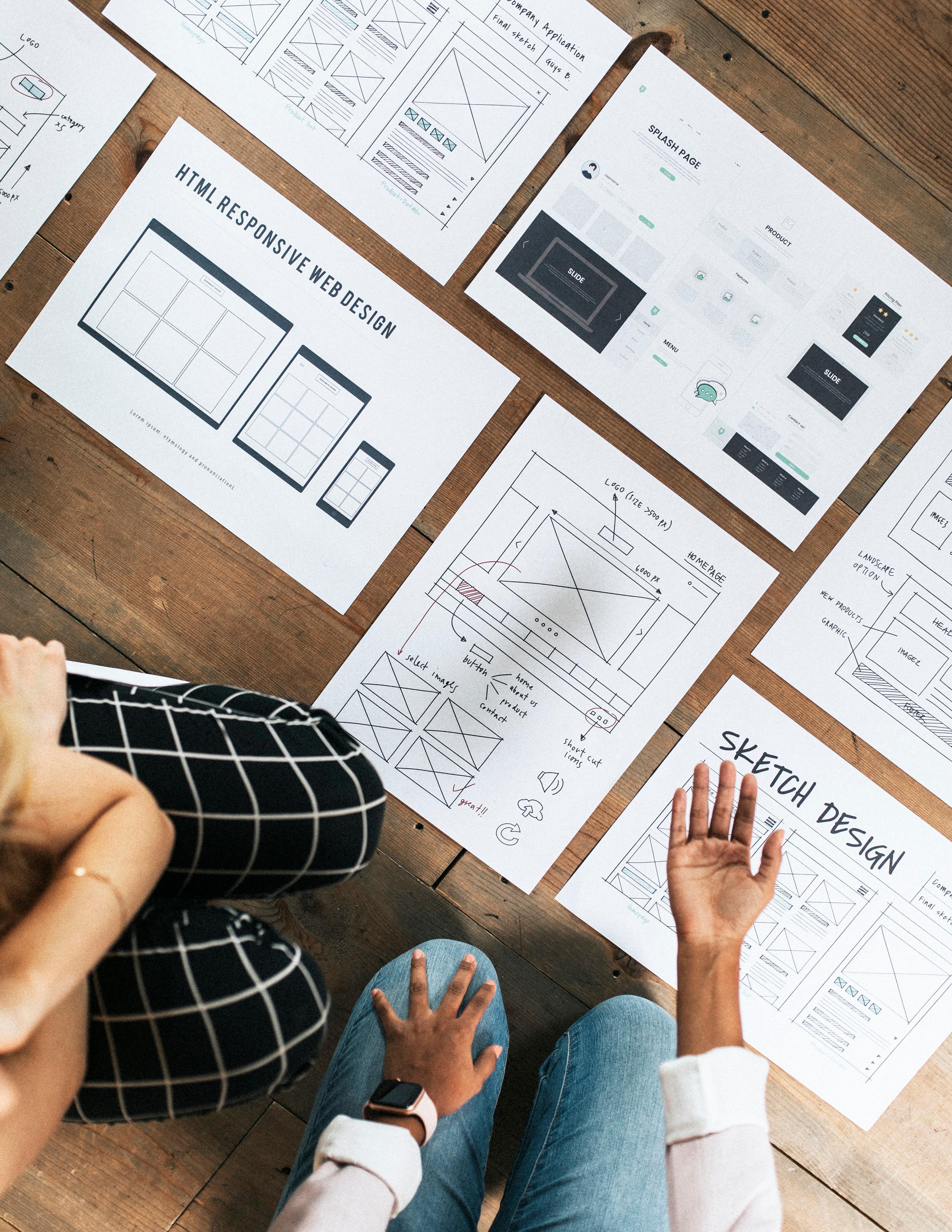
Where the journey and layout need shaping, we work with website design so templates, components and page types support the way people actually move through the site. Development stays aligned with those decisions rather than inventing behaviour later.
Development
We build the frontend, backend, CMS and required integrations. Custom functionality is implemented against the agreed specification, with maintainability in mind so the site does not become brittle the moment it launches.
Testing and launch
We test key journeys, forms, integrations, responsive behaviour, accessibility basics and performance before go live. Launch includes the technical checks needed for a live CMS and live enquiry paths.
Ongoing improvement
Websites keep changing after they are live. We can provide maintenance, new features and further website development as content, campaigns and operations evolve.
Selected work
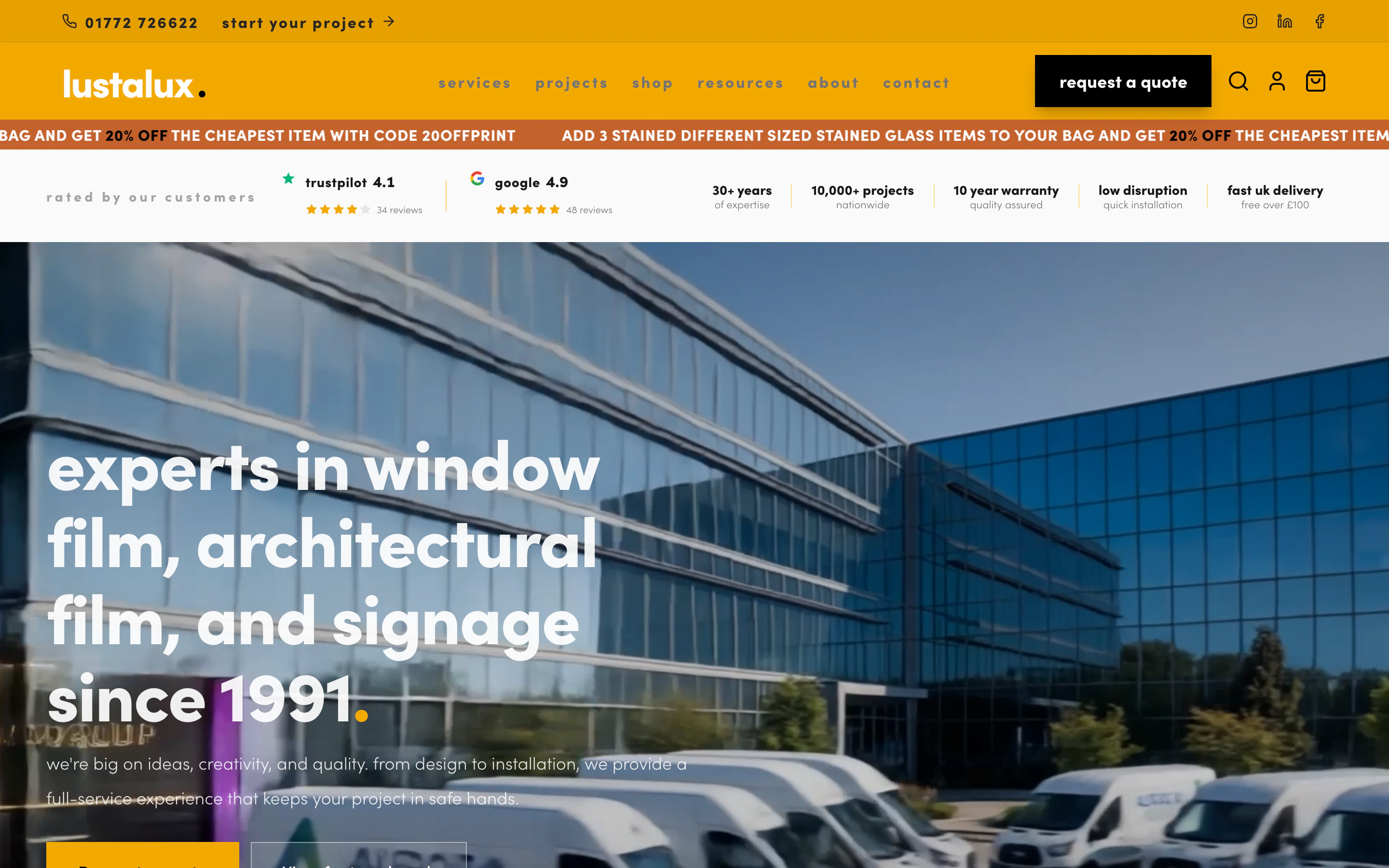
Lustalux
One website for Lustalux commercial services and Lustalux Direct, rebuilt as a custom Next.js storefront on Saleor, with made-to-measure commerce, staff operations and a WooCommerce migration designed around existing search equity.
- Ecommerce Development
- Website Development
- Website Design
- Custom Software
Website development and website design work best as one piece of work, so the site you approve is the site people can actually use.


07
After launch, and how we work
A website starts earning only when it is live, and that is also when real content, real traffic and real integrations start to show the gaps. Website maintenance covers updates, monitoring, security and the routine work that keeps the site reliable. Larger changes can follow as website development rather than a single launch event.
We work as a website development agency that treats the site as a commercial tool: architecture, CMS, performance and enquiry paths working together. You can expect clear planning, custom web development where a template is not enough, and a site your team can actually run. If you are comparing website developers, the useful test is whether the conversation starts with how the site will be used and maintained, or with a generic list of technologies.
Start a project
Start your website development project
Need a new business website, a CMS that editors can use, custom functionality, or a migration off a platform that cannot keep up? Speak to our website developers about what the site has to do. We will talk through structure, integrations and a realistic path to launch.
FAQ
Frequently asked questions about website development
Website development is the process of planning, building and launching a website. It includes structure, templates, the CMS, frontend and backend functionality, forms, integrations and the technical work that makes the site usable, maintainable and ready for search.
It is a different piece of work from website design, which focuses on how the site looks and how people move through it. Most projects need both.
Cost depends on the number of page types, the CMS, custom functionality, integrations, content migration and the amount of frontend and backend work required. A focused business website costs less than a platform with portals, booking, multiple integrations or a large content migration.
A clear brief, including what the site must do and which systems it must talk to, is the only reliable way to price the work.
Timelines follow the same factors as cost: scope, custom features, integrations, migration of existing content and URLs, and the time needed for testing.
A contained new site can move more quickly than a rebuild of a live website with historic URLs, a populated CMS and connected tools. We set a schedule once the scope is agreed.
Custom website development means building the site around your content, enquiry paths and operations rather than forcing those things into a generic template.
It can include bespoke page types, forms, booking, search, calculators, portals and integrations. We recommend custom work where it supports a real need, not as a default.
Website design is concerned with layout, visual presentation and user experience. Website development is concerned with how those designs are built: CMS, frontend, backend, integrations, performance and technical SEO.
On this page we focus on development. Design is covered separately so the two search intents stay distinct, even though the two disciplines work together on a live project.
Yes. Responsive website development is part of how we build sites, so layouts, navigation and forms should work across phones, tablets and desktops.
Mobile behaviour is tested as part of the build, because most visitors will not give a difficult page a second chance.
Technical SEO is part of website development. That includes architecture, URL structure, heading hierarchy, indexation, sitemaps, canonical tags, performance and redirects.
SEO friendly website development does not guarantee rankings. It does mean the site is built so search engines can crawl and understand it.
Yes. Websites can be connected to CRM systems, email platforms, booking tools, payment providers, analytics and other business software through APIs and other integration methods.
The options depend on the systems you already use and how reliable those connections need to be.
Yes. Website migration can move content, media, functionality and URLs to a new platform, with redirects in place where addresses change.
For sites with existing organic traffic, URL mapping and redirect testing are part of the plan, not an afterthought.
Yes. Websites need updates, security attention, content changes and occasional new features after launch.
Ongoing work can sit as a maintenance arrangement, with further website development when you need new functionality, integrations or performance improvements.
Continue